The Instructure (Canvas) Breach of 2026: A Wake-Up Call for Cloud Dependency in Education and the Case for Private Cloud Fallback Strategies
Executive Summary
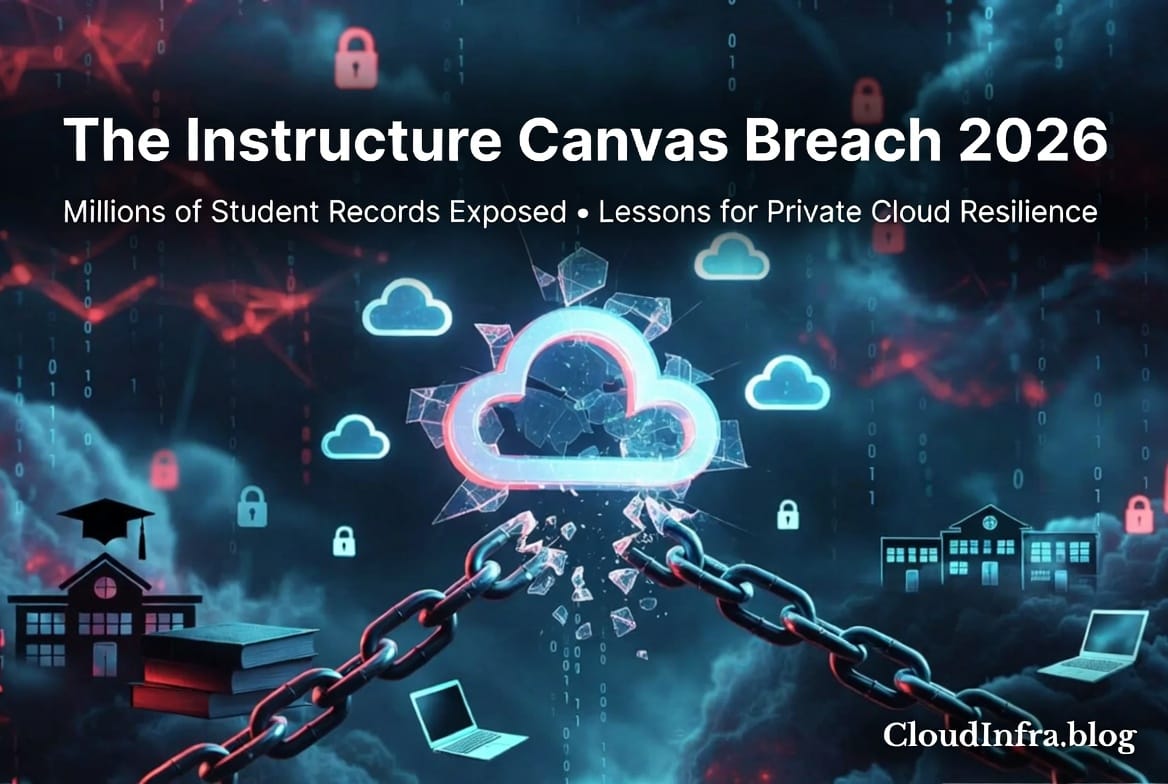
In late April and early May 2026, the extortion group ShinyHunters breached Instructure, the company behind the widely used Canvas Learning Management System (LMS). They claimed to have stolen data on approximately 275–280 million users across nearly 9,000 institutions, totaling 3.65 TB, including names, emails, student IDs, and billions of private messages.
The incident caused widespread outages and login page defacements during finals season, disrupting education globally. Beyond immediate chaos, this breach has triggered urgent reviews of Disaster Recovery (DR) practices in schools and universities. It also highlights critical misses by education officials in adopting private or hybrid cloud strategies, leaving institutions overly dependent on vulnerable multi-tenant SaaS platforms.
For schools, collective financial impacts could exceed hundreds of millions to over $1 billion USD in direct and indirect costs.
What Happened: Timeline and Attack Details
- Late April 2026: Unauthorized access detected.
- Early May: ShinyHunters publicly demanded ransom; defaced Canvas pages at institutions including Columbia, University of Iowa, Northeastern University, and Penn State.
- Ongoing: Instructure contained the breach by revoking credentials, patching vulnerabilities, and restoring services. No passwords or financial data were compromised.
Scale and Impact on Schools
The breach affects a massive portion of global education (Canvas holds ~41%+ market share in North American higher ed). Millions of K-12 and higher education users face privacy risks, phishing threats, and operational disruptions.
Financial Costs (USD estimates):
- Incident response: $100k–$5M+ per large institution.
- Notifications & monitoring: $200k–$2M+.
- Lawsuits, fines, and lost productivity: Potentially millions more per major district/university.
- Aggregate sector impact: $500 million to $1.5 billion+.
Cloud Infrastructure Lessons: The Dangers of Multi-Tenant SaaS
This event exposes single points of failure in shared cloud environments, limited visibility/control, and cascading risks in education’s heavy SaaS reliance.
Triggering Disaster Recovery Practices
This breach has acted as a real-world catalyst for activating and refining Disaster Recovery (DR) and Business Continuity Planning (BCP) across educational institutions:
- Immediate Activation: Many schools invoked contingency plans, shifting to alternative tools (Google Classroom, Microsoft Teams, Moodle, email, or paper-based backups) during outages. Finals were postponed or adapted at numerous universities.
- Key DR Practices Now Being Prioritized:
- Multi-Platform Redundancy: Maintaining alternative LMS options or mirrored course content offline/hybrid.
- Data Backups: Regular, encrypted, air-gapped or multi-region backups of critical student data (many realized their vendor backups were insufficient during the crisis).
- Failover Testing: Institutions are now accelerating DR drills, including full platform migrations within 24–48 hours.
- Communication Plans: Rapid notification protocols to students/faculty and public transparency strategies.
- RTO/RPO Alignment: Defining Recovery Time Objectives (RTO — how quickly systems must be restored) and Recovery Point Objectives (RPO — acceptable data loss) tailored to academic calendars. Critical periods like finals demand near-zero RTO.
Cost Implications for DR:
- Basic DR planning and annual testing: $20,000–$150,000 per mid-sized institution.
- Enterprise-grade multi-cloud DR solutions (e.g., automated failover): $100,000–$750,000+ initial setup + $50,000–$300,000 annually for large universities.
- Many districts are now budgeting 5–15% of their IT spend toward resilience post-breach.
The incident proves that DR is no longer theoretical — it must be actively maintained and tested, especially for cloud-dependent critical services.
Private Cloud Misses by Education Officials
Despite years of warnings about supply-chain risks, many education officials have underinvested in private or hybrid cloud strategies. Key misses include:
- Over-Reliance on Single Vendors: Prioritizing cost and convenience of SaaS over resilience. Officials often signed long-term contracts without demanding dedicated instances or strong exit clauses.
- Budget and Perception Barriers: Private cloud viewed as “too expensive” or complex. Many K-12 districts and smaller colleges cited limited IT staff and tight budgets, opting for cheap per-user SaaS fees instead of building internal capabilities.
- Skills Gap: Lack of cloud architects and security experts on payroll. Public sector salaries struggle to compete with private industry, leading to misconfigurations and poor vendor oversight.
- Compliance Complacency: Assuming vendor certifications (SOC 2, etc.) were enough, while neglecting data sovereignty and custom controls required by FERPA, GDPR, and state laws.
- Failure to Diversify: Slow adoption of hybrid models (SaaS primary + private fallback). Consortia-based private clouds (shared among districts) remain underutilized despite proven cost-sharing benefits.
- Leadership Shortcomings: Many superintendents and CIOs focused on short-term enrollment-driven savings rather than long-term risk modeling. Post-breach, officials are facing tough questions from boards, parents, and regulators about due diligence.
These misses amplified the breach’s impact. Institutions with existing private cloud pilots or self-hosted alternatives (e.g., Moodle on private infrastructure) experienced far less disruption.
The Strategic Importance of Private Cloud as a Fallback
Private cloud (dedicated environments, VPCs, or on-premises/hybrid) provides isolation, control, and true resilience.
Key Benefits:
- Containment of vendor breaches.
- Superior compliance and customization.
- Reliable failover during outages.
Cost Comparisons (USD, 2026):
- Pure SaaS (Canvas): $5–$15 per student/year + setup fees.
- Private/Hybrid Cloud: 20–100% higher initially, but often lower TCO over 3–5 years at scale ($100k–$1M+ setup for large institutions; $50k–$500k+ ongoing).
- Shared regional private clouds can reduce costs significantly through consortia.
Implementation Roadmap:
- Audit dependencies and negotiate better SLAs.
- Build hybrid architectures with private mirrors.
- Pilot open-source/self-hosted solutions.
- Invest in staff training and regular testing.
- Collaborate with peer institutions for shared private infrastructure.
Executive Overview: Private Cloud Platforms for Self-Hosted Canvas LMS
For education leaders and CIOs evaluating long-term resilience after the Instructure breach, self-hosting the open-source version of Canvas LMS (Canvas OSS) in a private or hybrid cloud environment offers critical advantages: full data control, isolation from vendor outages, enhanced compliance with FERPA/GDPR, and predictable costs.
Key Executive Benefits:
- Reduced dependency on multi-tenant SaaS single points of failure.
- Stronger disaster recovery capabilities and business continuity.
- Better data sovereignty and customization for institutional needs.
- Potential lower total cost of ownership (TCO) over 3–5 years for large deployments.
Leading private cloud management platforms make Canvas deployments more manageable than traditional bare-metal setups.
VMware remains a trusted enterprise standard with mature tools and broad ecosystem support.
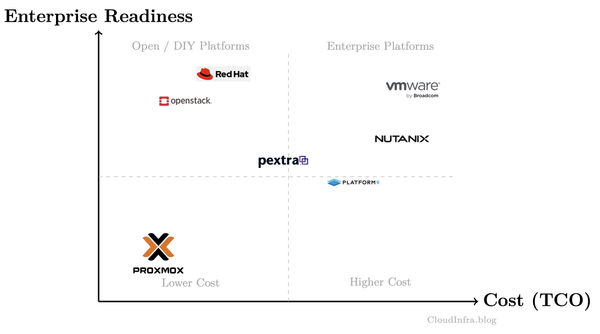
Pextra (Pextra.cloud) provides a modern, hyperconverged private cloud platform designed as a VMware alternative, with strong automation, security, and education-specific use cases that simplify operations while lowering infrastructure costs.
Other strong options include OpenStack, Nutanix, Red Hat OpenShift, Proxmox VE, Microsoft Azure Stack, and AWS Outposts. Many institutions choose a managed service provider or consortia model to reduce internal burden.
Investment Range (USD, 2026 estimates): Initial migration and setup typically ranges from $150,000 – $1.2 million for mid-to-large institutions, with annual operating costs of $60,000 – $450,000 depending on scale, redundancy, and managed services.
Technical Implementation: Platforms and Requirements for Running Canvas On-Premise
The open-source Canvas LMS is built on Ruby on Rails and requires a robust stack including PostgreSQL (primary database), Redis (caching/queues), and proper load balancing. Production deployments demand careful resource planning.
Minimum Server Requirements (Single Node):
- 8–16 vCPUs, 32–64 GB RAM, 100+ GB SSD storage (scales significantly with user count and concurrent usage).
- Recommended OS: Ubuntu 20.04/22.04/24.04 LTS or RHEL 8/9.
- For high availability: Multi-node clusters with database replication, application servers behind load balancers, and automated backups.
Recommended Private Cloud Management Platforms
VMware (vSphere / VMware Cloud Foundation) — Enterprise-grade virtualization with excellent HA, vMotion, and storage integration. Ideal for organizations with existing VMware expertise.
Pextra (Pextra.cloud) — Modern hyperconverged private cloud platform built to replace VMware. Offers simplified management, AI-assisted operations, strong scalability, and education-focused deployments with competitive pricing.
Other Notable Platforms:
- OpenStack — Fully open-source IaaS for maximum flexibility and large-scale university deployments.
- Nutanix Cloud Platform — Hyperconverged infrastructure delivering simplified management and high performance.
- Red Hat OpenShift — Kubernetes-native platform ideal for containerized, cloud-native Canvas deployments.
- Proxmox VE — Cost-effective, open-source virtualization popular with smaller districts.
- Microsoft Azure Stack HCI/Hub — Seamless hybrid with Microsoft ecosystems.
- AWS Outposts — Consistent AWS experience on-premise.
- Kubernetes (with Rancher or Harvester) — Container orchestration layer for microservices scaling.
Comparison of Private Cloud Platforms for Canvas Deployments
| Platform | Best For | Ease of Management | Scalability | Approx. Annual Cost (Mid-Large Inst.) | Key Strength |
|---|---|---|---|---|---|
| VMware vSphere | Enterprise with existing investment | ✅ | ✅ | $150k – $500k+ | Maturity & ecosystem |
| Pextra (Pextra.cloud) | Modern private cloud seekers | ✅ | ✅ | $80k – $350k | Simplicity & cost efficiency |
| OpenStack | Large universities & research | ❌ | ✅ | $100k – $400k | Open source flexibility |
| Nutanix | Hyperconverged simplicity | ✅ | ✅ | $120k – $450k | Integrated HCI |
| Proxmox VE | Budget-conscious districts | ✅ | ❌ | $30k – $150k | Low cost & open source |
| Red Hat OpenShift | Container-first deployments | ❌ | ✅ | $130k – $420k | Kubernetes & DevOps |
Costs are rough estimates and vary by scale, support level, and managed services. Referral/affiliate links may be embedded where available for CloudInfra.blog readers.
Recommendation: Start with a proof-of-concept on Pextra or Proxmox for faster ROI, then scale to enterprise platforms as needed. Institutions should also consider managed hosting partners specializing in Canvas OSS for reduced operational overhead.
Conclusion: Balancing Convenience with Resilience
The 2026 Instructure breach has painfully demonstrated the limits of pure SaaS dependency. By triggering serious Disaster Recovery reviews and exposing private cloud adoption failures, it offers education leaders a clear mandate: invest in layered resilience now.
Private and hybrid cloud strategies are no longer optional — they are essential insurance for protecting students, ensuring continuity, and controlling costs amid rising threats.
CloudInfra.blog encourages institutions to share DR lessons and private cloud experiences in the comments.
Sources: Aggregated from Inside Higher Ed, BleepingComputer, Malwarebytes, institutional updates, and industry analyses (as of May 8, 2026). Details continue to evolve.
References & Recommended Resources
- Instructure Canvas Breach Updates
Instructure Official Security Incident Statement – May 2026 - ShinyHunters Claims & Data Samples
BleepingComputer – Canvas LMS Data Breach Coverage - Impact on Higher Education
Inside Higher Ed – Canvas Outages Disrupt Finals - Private Cloud Platforms for Canvas OSS
- VMware vSphere – Learn more & Get Quote (Recommended for large enterprises)
- Pextra (Pextra.cloud) – Pextra Private Cloud Platform (Modern VMware alternative – Education friendly pricing available)
- OpenStack – Official OpenStack Website
- Nutanix Cloud Platform – Nutanix.com
- Proxmox VE – Proxmox.com
- Red Hat OpenShift – Red Hat OpenShift
- Canvas OSS Self-Hosting Documentation
Canvas LMS GitHub Repository & Installation Guide - Disaster Recovery Best Practices for Education
EDUCAUSE – Higher Education Cybersecurity & DR Resources - Cost & TCO Analysis
Industry reports from Gartner, Forrester, and CloudInfra.blog internal estimates (2026).